
When it comes to choosing the ideal motion sensor for outdoor solar lighting, you’ll encounter two popular options: PIR (Passive Infrared) sensors and radar sensors. While both provide excellent motion detection for enhancing security and convenience, each has its own strengths, applications, and best use scenarios. Here’s what you need to know to make an informed choice for your outdoor solar lights.
Understanding PIR Sensors
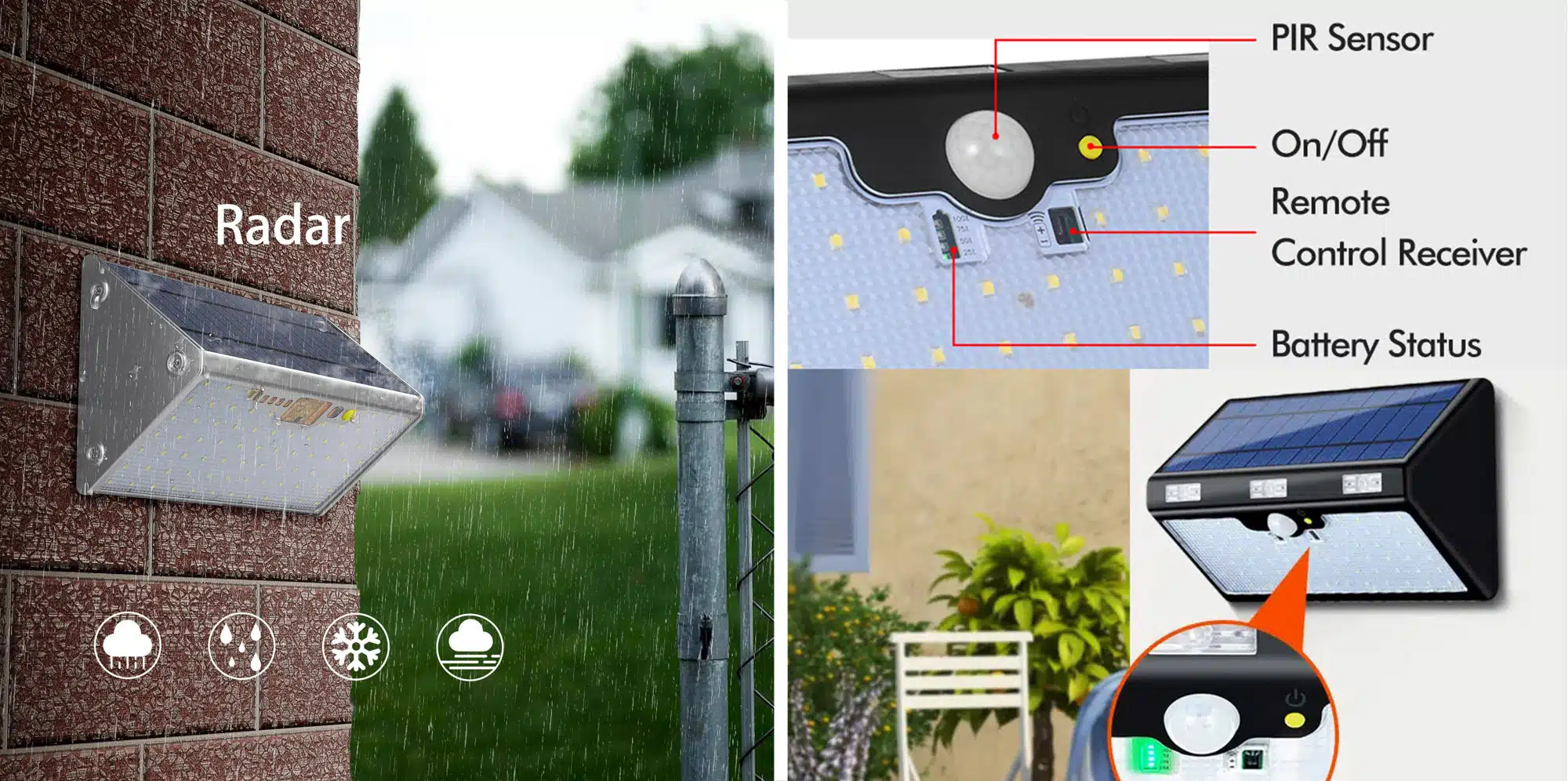
PIR (Passive Infrared) sensors are designed to detect heat signatures in their environment. When a person, vehicle, or animal enters a PIR sensor’s detection zone, the sensor picks up the heat changes, triggering the light.
- How PIR Works: The sensor is “passive,” meaning it doesn’t emit any signals; instead, it detects infrared radiation naturally emitted by warm bodies. This makes it reliable in environments with minimal movement and frequent human or vehicle traffic.
- Best Applications: PIR sensors are highly effective for focused, short-range detection. They work best in places where detection areas can be controlled, such as entrances, driveways, patios, and garages.
- Range and Sensitivity: Typical PIR sensors have a detection range between 5 and 15 meters and a detection angle of about 120°. They’re ideal for spaces where activity is closer to the sensor, like walkways or near doorways. PIR sensors also excel at ignoring smaller objects, so they won’t be triggered by every falling leaf or passing pet, making them perfect for outdoor solar lights that aim to conserve battery.
- Challenges and Maintenance: PIR sensors perform less effectively in extreme weather, as heavy rain, dense fog, or intense heat can affect sensitivity. Proper positioning can help, but it’s wise to choose solar motion lights that are IP65-rated or higher for weather resistance. Additionally, LiFePO4 batteries are recommended in solar lights to ensure long-lasting power, even with frequent sensor activation.
Overview of Radar Sensors
Radar sensors work by emitting radio waves and measuring the time it takes for the waves to return after bouncing off a moving object. Because they actively emit and receive signals, radar sensors have a different set of strengths than PIR sensors.
- How Radar Sensors Work: By continuously sending out radio waves, radar sensors detect even slight movements by analyzing the wave reflections. This makes radar sensors more sensitive to movement than PIR sensors, which rely on heat.
- Best Applications: Radar sensors are excellent for open areas, large spaces, and locations with challenging environmental conditions, such as heavy rain, snow, or fog. They detect motion at a greater distance, typically reaching 10-20 meters or more, and have a wider detection angle, often up to 180°.
- Key Advantages: Radar sensors detect movement from both people and objects, regardless of temperature. This ability to “see through” materials like glass or thin walls makes radar sensors ideal for layered security needs.
- Considerations: Due to their high sensitivity, radar sensors can sometimes be triggered by wind-blown objects, so it’s helpful to calibrate the settings if your solar light offers adjustable sensitivity. Additionally, radar sensors tend to use more power, so look for solar lights with high-capacity, rechargeable batteries (like 13000mAh) for optimal performance and longevity.
PIR vs. Radar: Key Differences and Choosing the Right Fit
| Feature | PIR Sensor | Radar Sensor |
|---|---|---|
| Detection Range | ~10 meters | ~15-20 meters or more |
| Detection Angle | ~120° | Up to 180° |
| Sensitivity | Moderate (less sensitive to small objects) | High (detects even slight movements) |
| Environmental Resilience | Good in mild conditions, limited in heavy weather | Highly resilient, works in most weather |
| Power Usage | Efficient for battery life | Higher power requirement |
- When to Choose PIR: PIR is a top choice for focused areas with predictable traffic. If you need reliable lighting for entry points or walkways, a PIR sensor will likely serve your needs with energy efficiency and low false alarms.
- When to Choose Radar: For open spaces and locations with unpredictable motion, radar sensors are ideal. They’re also beneficial in areas where the lights need to be triggered from farther away, like large driveways or expansive yards.
FAQs: Choosing and Using Motion Sensors in Solar Lights
- Can PIR Sensors Work in Daylight? Yes, most modern PIR-based solar lights have light-control sensors that prevent them from activating during the day, saving battery life for nighttime use.
- How to Avoid False Triggers with Radar Sensors? Adjust sensitivity settings (if available) and avoid placing radar-equipped solar lights near tree branches or other moving objects to reduce unnecessary activations.
- Do Motion Sensors Deter Burglars? Yes, studies show that lights triggered by motion sensors can help deter unauthorized access, making them a valuable part of any security setup.
Conclusion: Selecting the Best Sensor for Your Solar Lights
Choosing between PIR and radar sensors depends on your specific needs. If you want energy efficiency and focused detection, a PIR sensor solar light is often the best option. For those requiring broader coverage and sensitivity, particularly in tough weather, a radar sensor may be more suitable. Remember to consider features like battery capacity, weatherproof rating, and installation options to get the most out of your solar light.
Ready to make the upgrade? Browse our range of advanced solar lights equipped with PIR and radar sensors, designed to meet various outdoor lighting needs. Illuminate your space with confidence—for inquiries, contact us at info@couleenergy.com or throw a call at +1 737 702 0119 (WhatsApp)