
Introduction:
As global demand for sustainable solutions continues to grow, solar outdoor lighting is becoming an essential part of environmentally friendly infrastructure for homes, cities, and businesses alike. In 2024, the solar outdoor lighting market is expected to advance significantly, driven by rapid improvements in technology, energy efficiency, and smart controls. These innovations are not only making solar lighting more accessible and effective but are also transforming its role across diverse applications, from enhancing urban safety to illuminating remote areas where traditional lighting is impractical.
This article dives into the latest trends in solar outdoor lighting, including the integration of intelligent sensors, improved battery storage, and sleek designs that cater to both functional and aesthetic needs. Whether you’re an industry professional, municipal planner, or homeowner exploring sustainable options, this guide offers valuable insights into what’s shaping the future of solar outdoor lighting—and how these developments can impact your next project. By understanding these trends, you’ll be better equipped to choose solutions that are both forward-looking and effective in meeting your specific needs.
1. Background Overview
1.1 Market Status and Growth Potential
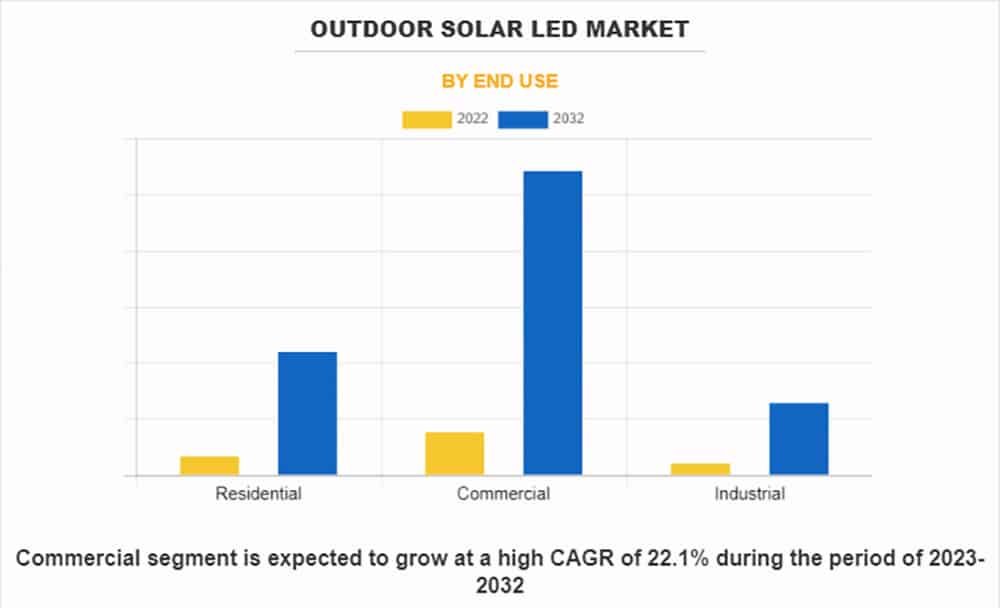
The solar outdoor lighting market is experiencing unprecedented growth, driven by rising global awareness of environmental issues and increasing demand for energy-efficient alternatives. According to recent industry reports, the market for solar outdoor lighting is expected to grow significantly over the next five years. In 2023, it was valued at approximately USD 5.7 billion, with projections indicating steady annual growth that could see it surpass USD 10 billion by the end of the decade. [“] This growth is largely attributed to the cost-effectiveness and sustainability of solar lighting solutions, which reduce dependence on traditional energy sources and cut down on greenhouse gas emissions.
One of the key factors behind this expansion is the technological evolution of solar panels, energy storage systems, and LED lighting, which together have made solar lighting both more affordable and efficient. Cities, commercial spaces, and residential users are increasingly adopting solar lighting to cut energy costs and meet sustainability goals. This demand is particularly pronounced in areas where electricity infrastructure is limited or where powering traditional lights would be costly.
1.2 Environmental Impact and Policy Support
Another driving force behind the growth of the solar outdoor lighting market is the global push toward renewable energy adoption. Countries worldwide are implementing stricter environmental policies aimed at reducing carbon emissions and promoting green energy solutions. The European Union, for example, has set ambitious targets to reduce greenhouse gas emissions by 55% by 2030, while many U.S. cities are adopting net-zero targets for the coming decades. These policies have a direct impact on the solar lighting market, as they encourage investments in renewable solutions over conventional lighting systems.
Solar lighting systems are also gaining attention for their low maintenance needs and long operational life. Unlike traditional lighting, solar outdoor lights operate independently of the electrical grid, which can save significant costs in energy and infrastructure—an advantage especially relevant to remote or off-grid areas. As solar lighting technology becomes more accessible, municipalities, businesses, and homeowners are finding it easier and more practical to make the switch to sustainable lighting solutions.
1.3 Technological Advancements Fueling Market Growth
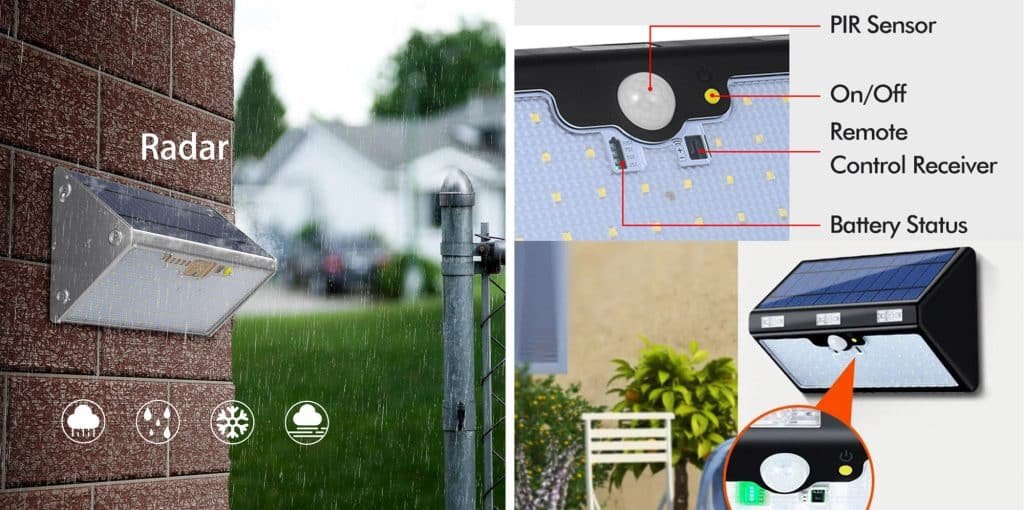
Recent advancements in solar technology have further fueled market growth, particularly in the areas of energy storage and intelligent lighting controls. Modern solar lights now use highly efficient lithium-ion and lithium iron phosphate (LiFePO4) batteries that store more energy and last longer, ensuring consistent operation even on cloudy days. Additionally, smart control systems with features like motion detection, adjustable brightness, and remote control have made solar lighting more versatile and user-friendly.
These innovations are reshaping how and where solar lighting can be used, expanding its applications from residential driveways to large-scale public projects. Cities and companies can now rely on solar lights for more than just basic illumination; they can integrate them into security systems, add aesthetic lighting to public spaces, or use them in remote areas where electricity is otherwise inaccessible.
With these market conditions, advancements, and policy support, solar outdoor lighting is quickly becoming an essential component of future-focused infrastructure planning.
2. Solar Outdoor Lighting Innovation Trends in 2024
2.1 Enhanced Energy Storage and Efficiency
One of the most transformative trends in solar outdoor lighting for 2024 is the development of more efficient energy storage solutions. Traditionally, the biggest limitation of solar lights has been their dependency on weather conditions. New advancements in lithium-ion and lithium iron phosphate (LiFePO4) batteries, however, are allowing for greater energy storage and longer battery life. These high-capacity batteries can store energy more effectively, ensuring that solar lights stay functional even during cloudy periods or after extended days without sunlight. This improvement enhances reliability, making solar lighting a more feasible option for regions with less consistent sunlight.
Additionally, solar panels themselves are becoming more efficient. Cutting-edge solar cells, such as HPBC and TOPCon panels, are capable of capturing sunlight from multiple angles and generating more energy from the same surface area. These technologies are expected to improve the overall performance of solar lights, providing longer-lasting illumination without increasing the panel size.
2.2 Smart Lighting Controls and IoT Integration
With the rise of the Internet of Things (IoT), solar lighting systems are now incorporating smart technology that allows for more precise control and automation. Motion detection, remote operation, and scheduling features are becoming standard in many solar lighting solutions. These controls not only improve energy efficiency but also allow users to customize lighting to their needs. For example, lights in a parking lot can be set to operate at full brightness only when motion is detected, reducing unnecessary energy use.
This smart functionality also allows for integration with other IoT-enabled devices, making solar lighting more adaptable to various applications. City planners can link solar streetlights to broader smart city networks, enabling real-time monitoring of energy use, maintenance needs, and overall lighting efficiency. For businesses, smart solar lights can integrate with security systems, enhancing on-site safety by lighting up pathways or critical areas only when activity is detected.
2.3 Aesthetic and Functional Design Innovations
In 2024, the design of solar outdoor lights is evolving to be both visually appealing and highly functional. Manufacturers are moving beyond the bulky, industrial designs of the past to create more streamlined, modern fixtures that fit seamlessly into various outdoor environments. Whether it’s for residential landscapes or corporate campuses, solar lighting options now come in sleek, compact forms, blending style with functionality.
Moreover, adjustable color temperature is becoming a sought-after feature, allowing users to modify the color and warmth of the light to match different settings. This versatility is particularly appealing for residential areas, where homeowners can choose softer lighting for aesthetic appeal or brighter settings for security purposes. Solar lights with color-adjustable LEDs and durable, weather-resistant materials are expanding the usability of solar lighting for outdoor spaces, from cozy patios to high-traffic public areas.
2.4 Hybrid Solar Systems
Hybrid solar lighting systems, which combine solar with traditional power sources, are gaining traction. These systems can automatically switch to grid power when solar energy is insufficient, ensuring continuous lighting. Hybrid models offer flexibility for areas with limited sunlight or during extended periods of inclement weather. This capability is valuable for urban and industrial applications, where uninterrupted lighting is crucial for safety and operational efficiency.
Hybrid systems represent an important trend for regions with fluctuating climates and have the added advantage of reducing dependency on the grid, while still providing a reliable backup power option. By integrating both solar and electric power sources, hybrid solar lights are opening new possibilities for solar adoption in traditionally challenging environments.
2.5 Modular and Portable Solar Lighting
Another innovative trend is the rise of modular and portable solar lighting systems. These systems allow for greater flexibility and can be moved or adapted as needed, which is particularly useful for temporary installations or evolving spaces. For example, modular solar lighting setups are becoming popular at construction sites, outdoor events, and remote locations where temporary lighting is required. These modular systems can be scaled up or down based on specific needs, offering users a flexible solution for short-term or changing requirements.
Additionally, some portable solar lights now come with built-in charging ports for small devices, providing added convenience for outdoor adventures or emergency situations. These lightweight, durable solutions are redefining how solar lighting can be applied in areas where traditional setups might be less feasible.
Each of these trends demonstrates the versatility and adaptability of solar outdoor lighting in 2024, making it more accessible, efficient, and customizable than ever before. As technology continues to advance, these innovations are expected to set new standards for sustainable outdoor lighting solutions across the globe.
3. Action Guide: How to Keep Up with Market Trends
As the solar outdoor lighting industry evolves, businesses, city planners, and consumers alike are looking for ways to stay on the leading edge. Keeping up with trends can provide both financial and environmental benefits, but it requires informed choices and strategic planning. Here’s a step-by-step guide to adopting and benefiting from these market shifts.
Step 1: Choose High-Efficiency Products
With advancements in solar panel efficiency and battery storage, selecting the latest, most efficient products is crucial. Look for lighting systems with high-efficiency solar cells (such as TOPCon solar panels) and energy-dense batteries like lithium iron phosphate (LiFePO4). These technologies not only improve energy storage and reliability but also ensure that your lights function well in various weather conditions.
- Tip: Research the energy storage and efficiency ratings of solar lights before purchase. High-efficiency products may have a higher initial cost but will save more energy over time.
Step 2: Incorporate Smart and IoT-Enabled Solutions
Smart solar lighting is more adaptable and can provide additional energy savings. When choosing solar lighting solutions, consider systems with built-in motion sensors, remote controls, and programmable schedules. Integrating solar lights with IoT systems allows for real-time monitoring, helping you to control energy usage, track maintenance needs, and ensure lights are functioning optimally.
- Tip: For businesses or large-scale installations, consider using a smart lighting management system that allows centralized control of all lighting units. This can simplify maintenance and optimize usage.
Step 3: Opt for Hybrid Models for Enhanced Reliability
Hybrid solar lighting systems, which can switch between solar and grid power, provide flexibility for areas with inconsistent sunlight. These systems allow for uninterrupted lighting even during cloudy or rainy weather. By selecting hybrid options, businesses and municipalities can ensure continuous lighting without fully depending on solar power.
- Tip: Hybrid systems are ideal for high-traffic or safety-critical areas, such as parking lots, streets, and public parks. This setup also provides a backup power source in emergencies.
Step 4: Prioritize Customizable and Aesthetic Designs
Solar lighting now offers options for both functionality and design, which is especially valuable for residential, commercial, and urban landscapes. Look for products that offer adjustable brightness and color temperature to suit different environments and uses. Additionally, aesthetic and compact designs blend more seamlessly into outdoor spaces, making them suitable for areas where appearance is a priority.
- Tip: Choose lighting that matches the style of your property or area. Solar lights are available in various forms, from sleek bollards for walkways to traditional-style street lamps.
Step 5: Consider Portable and Modular Options for Versatility
Modular and portable solar lights are flexible, allowing users to reconfigure lighting setups as needed. This is especially useful for events, construction sites, or other temporary settings. Portable systems are also valuable for emergencies, providing reliable lighting and even device-charging capabilities in remote or off-grid locations.
- Tip: Keep a set of portable solar lights for emergencies or off-grid activities. Many models offer additional features, such as USB charging ports, making them multipurpose tools for both lighting and power.
Step 6: Monitor and Adapt to Emerging Policies and Incentives
Many governments offer incentives, tax breaks, and rebates for adopting renewable energy solutions, including solar lighting. Staying informed about local policies can help reduce the cost of solar lighting installations and maximize the return on investment. Municipalities and businesses can especially benefit from these programs, which often align with larger sustainability and carbon reduction goals.
- Tip: Check with local energy authorities for updates on renewable energy incentives and programs. In some cases, businesses can receive additional support or subsidies for large-scale solar projects.
Step 7: Regular Maintenance and Performance Optimization
Even with low-maintenance designs, solar lights benefit from periodic inspection to ensure they’re operating efficiently. Cleaning the solar panels to remove dust and debris can improve energy collection, while checking for any wear or damage will keep the lights working effectively.
- Tip: Schedule semi-annual inspections for large solar lighting installations. Regular maintenance helps prolong product life and prevents unexpected issues.
Step 8: Plan for Scalability in Future Projects
When investing in solar lighting for public spaces or commercial properties, consider options that allow for scalability. Modular setups and smart lighting systems can be expanded as needs grow. This ensures that you’re not only meeting current lighting requirements but also prepared for future developments.
- Tip: For large projects, consult with a solar lighting provider about options for expandable or modular systems. Planning for scalability can save costs and resources in the long run.
By following these steps, you can harness the latest advancements in solar outdoor lighting to create efficient, sustainable, and future-proof lighting solutions. Whether you’re lighting up a public park or enhancing the security of a residential property, keeping up with market trends will help you get the most out of your investment in solar technology.
4. Market Forecast and Future Outlook
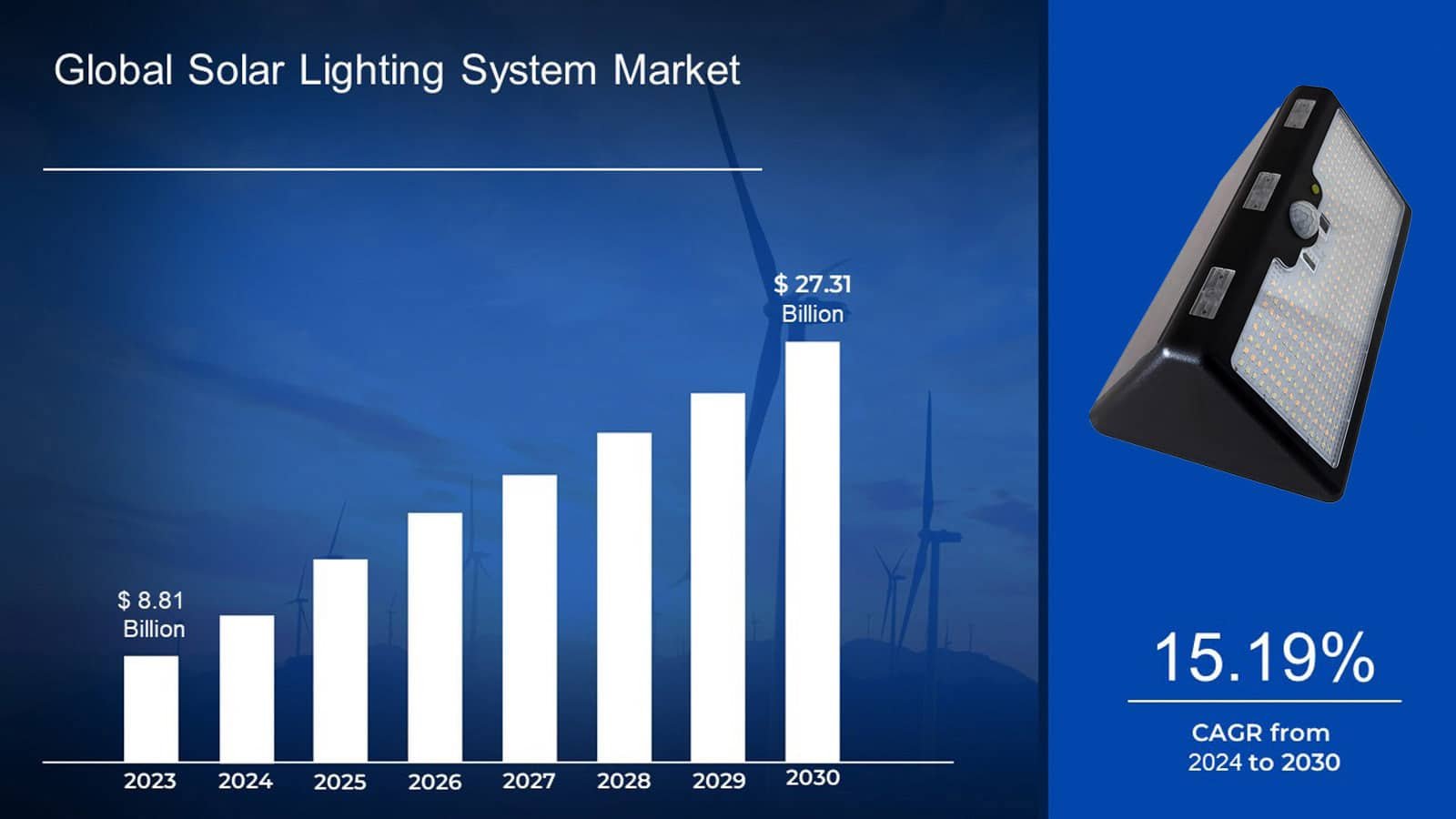
The future of solar outdoor lighting is bright, with the market projected to experience strong growth driven by environmental concerns, government incentives, and rapid technology advancements. By 2030, the solar lighting industry is expected to expand significantly, reaching an estimated market size of USD 27.31 billion, growing at a compound annual growth rate (CAGR) of over 15% from 2024 onward. [“] This growth reflects a global shift towards sustainable solutions, with solar lighting becoming increasingly affordable and efficient, making it an attractive alternative to conventional lighting in both urban and rural settings.
Key factors fueling this growth include ongoing cost reductions in solar technology, as well as heightened resilience requirements in disaster-prone regions. Solar lighting’s independence from the grid offers added reliability during power outages, which is particularly beneficial in critical infrastructures and rural areas. Additionally, new advancements—such as integration with IoT for remote monitoring and intelligent lighting controls—are making these systems smarter and more adaptable to user needs. Features like automated dimming, motion sensors, and energy-efficient LED technologies are driving a shift towards more customized and efficient lighting solutions.
In terms of geographical expansion, countries with government-led green initiatives, such as the U.S. and parts of the European Union, are rapidly adopting solar lighting, supported by incentives, tax credits, and funding from large-scale programs like the Inflation Reduction Act in the U.S. These measures not only stimulate innovation but also increase accessibility in low-income and underserved communities, contributing to market growth.
Looking forward, industry analysts predict that solar lighting will continue to evolve, with enhanced storage solutions and energy distribution mechanisms that will help address current limitations, particularly in regions with variable sunlight. With the rise of smart city initiatives, we can expect solar outdoor lighting to play a central role in sustainable urban development, further underscoring its long-term potential in creating eco-friendly, resilient infrastructure.
5. Recommended Resources for Further Exploration
To stay updated on the latest trends and opportunities in the solar outdoor lighting market, it’s essential to keep learning from credible industry sources. Here are some valuable resources that can deepen your understanding of the market and help you stay ahead:
• Greentech Media: Offers insights on the latest technological developments in solar outdoor lighting, including advances in solar panels, battery storage, and smart lighting systems.
• Solar Power World: Regularly publishes articles and case studies about the application of solar technology in commercial and residential settings, ideal for those interested in practical insights on market adoption and installation trends.
• International Renewable Energy Agency (IRENA): Provides data-driven reports on global solar energy trends, government policies, and incentives that drive growth in the outdoor lighting sector.
• National Renewable Energy Laboratory (NREL): Shares research on cutting-edge solar technology, storage, and energy efficiency, which are crucial to understanding future developments in solar outdoor lighting.
These resources will equip readers with the latest data, market analysis, and trends to make informed decisions in the rapidly evolving solar lighting industry.
6. Conclusion and Additional Resources
In summary, the solar outdoor lighting market in 2024 is moving towards greater integration of energy-efficient technologies, smart controls, and storage solutions that meet evolving consumer and regulatory demands. By understanding the current trends—like the shift towards higher-efficiency panels, intelligent lighting, and hybrid energy systems—stakeholders can align with future growth areas and ensure that their investments deliver sustainable value.
Additional Resources for Practical Application:
• Educational Webinars: Many solar organizations, such as Solar Power World and Aurora Solar, offer webinars on current market challenges and strategies for implementing advanced solar systems in various outdoor settings.
• Implementation Guides: Check out resources like the Solar Energy Industries Association’s (SEIA) installation and maintenance guides, which provide practical advice on deploying solar lighting solutions effectively.
Whether you are a decision-maker, installer, or consumer, these resources will guide you through the current market and provide insights into optimizing solar outdoor lighting solutions for long-term success.