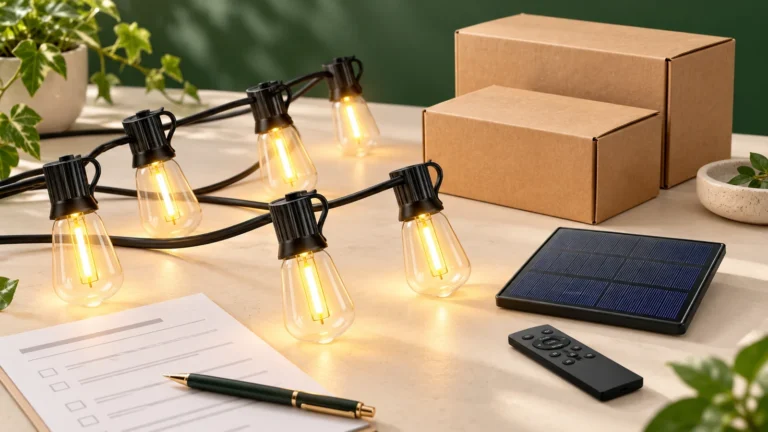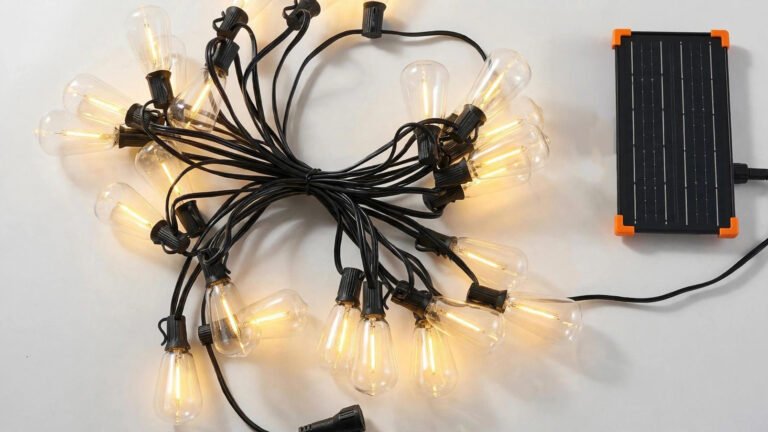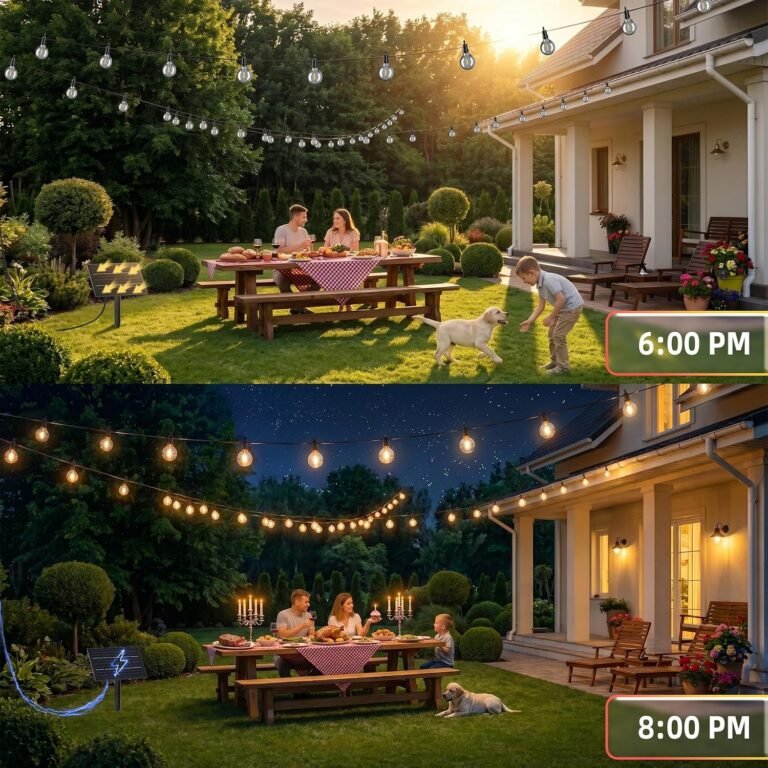

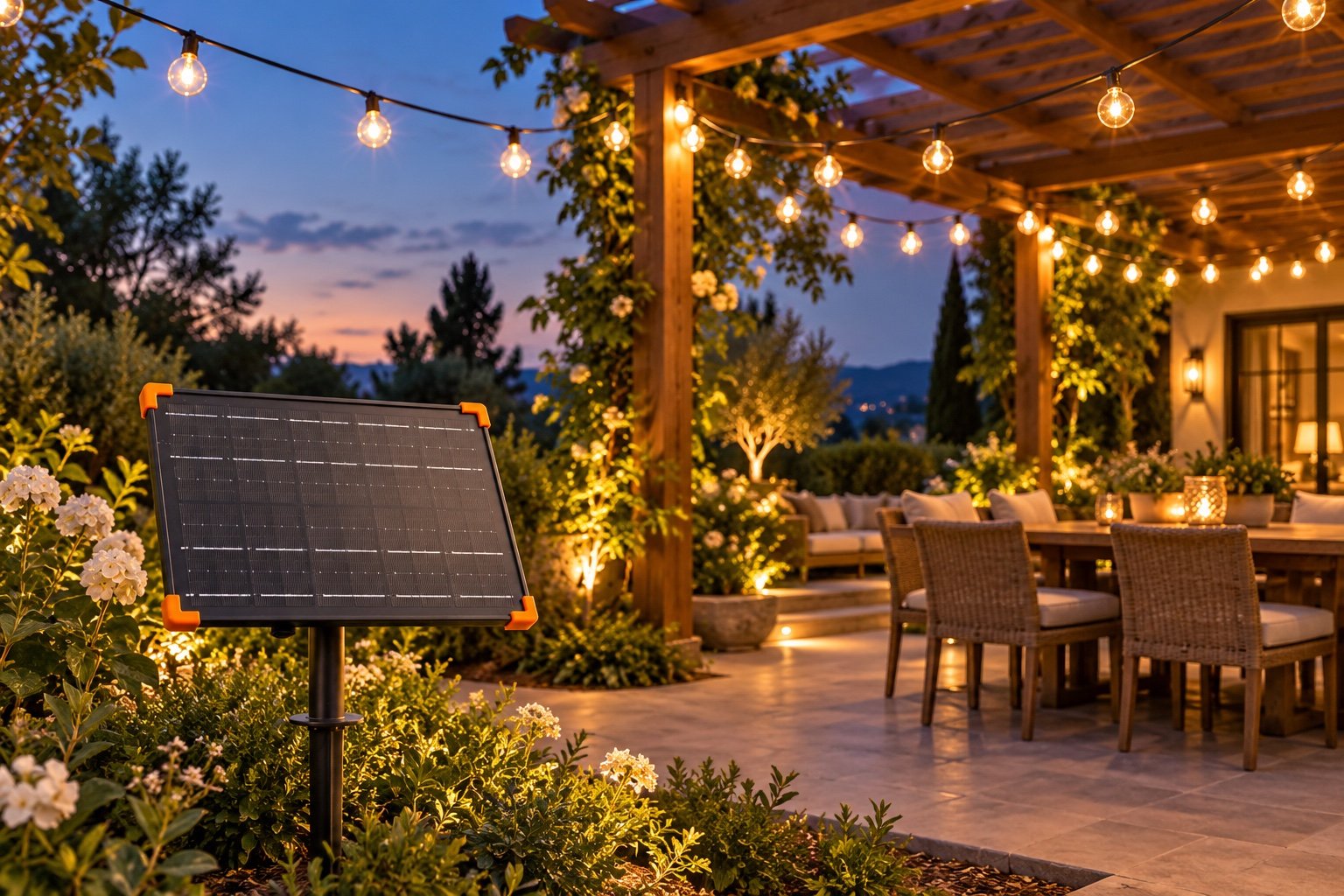
A custom solar string light is more than a logo on a box. B2B buyers can shape the light appearance, string layout, solar system, controls, materials, accessories, and packaging. The best customization brief starts with the installation and target customer, then locks the technical specification before artwork or production.
What can be customized on solar string lights?
Depending on the manufacturer’s platform and engineering scope, buyers may be able to specify bulb style, light color, cable length and color, bulb spacing, solar-panel mounting, battery and control options, branding, instructions, accessories, and retail packaging. Availability varies by model. Ask the supplier to distinguish standard options from engineering changes, state any MOQ implications, and explain whether changes affect verification or compliance.
For importers, distributors, retailers, hospitality groups, and installers, the goal is not to customize every detail. It is to configure a product that suits a real use case and can be reproduced consistently. This guide explains the main choices, what to verify, and how to prepare a practical OEM or ODM request.
1. Light source and visual style
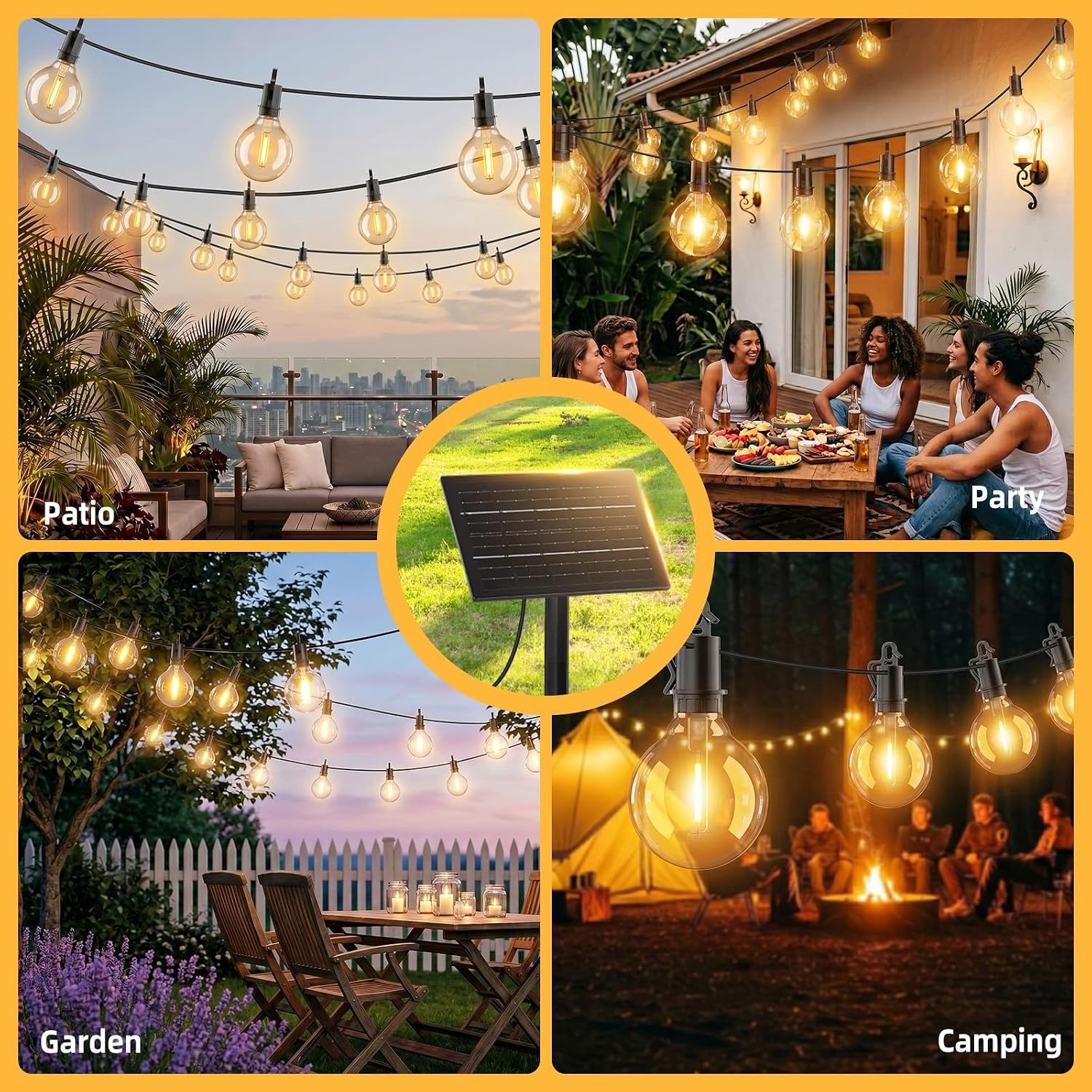
The bulb is the most visible part of a string light, so it strongly affects the product’s character. Ask which bulb shapes and sizes are available on the chosen platform. Common decorative formats include globe and candle-style forms, but the supplier should confirm the actual dimensions, socket fit, and compatible replacement parts for each model.
Buyers can also discuss light color, color temperature, lens finish, diffuser appearance, and whether bulbs are replaceable. If a product has dimming or selectable modes, confirm whether those functions are supported by the exact controller and power system. Do not assume a feature shown in a catalog image is included in every configuration.
For hospitality and project buyers, request a sample in the intended setting. A bulb can look different in daylight, at dusk, and against a dark background. Record the approved appearance with a reference sample or clear photographs under agreed conditions.
2. String length, spacing, and layout
String geometry determines how a product fits a patio, pergola, garden, market stall, or event venue. Depending on the platform, OEM options may include total illuminated length, lead cable length, spacing between sockets, the number of light points, and the position of the solar panel or controller.
Write down the measurement convention. Suppliers may describe total cable length, illuminated length, or distance from the power unit to the first bulb differently. Ask for a dimensioned drawing that identifies the lead wire, lit section, socket spacing, end connector, and any extension cable. This prevents a common sourcing problem: the stated length is correct, but the usable illuminated run is not what the buyer expected.
Share a simple installation sketch with mounting points and the approximate route. The supplier can then recommend a standard configuration or explain where a custom cable, connector, or layout changes the product specification.
3. Solar panel, battery, and charging options
The solar system is a functional part of the product, not a decorative accessory. Buyers can ask about panel form factor, mounting style, cable reach, battery type and capacity, replaceability, and whether a model offers an additional charging input. These are platform-specific choices; request a written configuration sheet for the exact SKU being quoted.
Ask the manufacturer to define any runtime claim with its test conditions. Useful details include the battery’s starting charge, panel exposure or charging method, selected brightness or mode, ambient conditions, and the end point used for the measurement. Solar energy varies with location, season, time, weather, and panel orientation. PV output is also affected by temperature. U.S. Department of Energy: solar radiation and PV performance factors.
For a meaningful runtime comparison, request a test on the complete system under stated, repeatable conditions. If possible, also request a daily charge-and-discharge profile in a representative location. A fully charged battery test answers a different question from how the set performs after limited winter sun or several cloudy days. There is no single runtime value that applies to every site and operating mode.
Do not compare battery capacity in mAh alone. Ask for nominal voltage and energy in watt-hours (Wh), the usable capacity assumed in the test, and the lighting load in each mode. For orientation, nominal Wh equals nominal voltage multiplied by capacity in Ah; this is nameplate energy, not guaranteed deliverable energy. Discharge conditions, temperature, system losses, and the battery protection cutoff can affect usable energy. Confirm which rechargeable battery chemistry is fitted and that the charge-control profile is designed for it. For example, Texas Instruments describes chemistry-specific charge and termination algorithms in its multi-chemistry charger reference design; ask the supplier to document the profile used on the quoted model. If the project requires an extended panel cable or a separately mounted panel, confirm cable length, connector type, polarity, and installation guidance. If USB or USB-C backup charging is offered, verify that it is on the exact model and clarify its intended use. Do not imply that every solar string light includes a backup port or replaceable battery unless the specification confirms it.
4. Controls and user experience
Control options can distinguish one product tier from another. Depending on the electronics, buyers may discuss on/off operation, brightness steps, lighting modes, timer functions, or remote control. Before adding a feature to packaging or a product listing, confirm it exists on the model, works with the selected power system, and is included in the approved sample.
Map the expected user journey. Can the buyer reach the switch after installation? Is the remote included, and what battery does it use? Does a timer restart automatically after charging, or must a user set it again? Which indicator shows charging or operating status? These details are more useful than a long feature list that does not explain how the product behaves.
For private-label products, ask the factory to identify which functions are standard firmware and which require engineering. A control-board change may affect the sample cycle, documentation, verification, and production schedule. Keep the user instructions aligned with the final control logic.
If the product uses a separate solar control box
Confirm the full electrical interface before treating a control box as interchangeable. Record the supported input and output voltage range, maximum output current or power, connector and polarity, supported LED load, battery chemistry, charging method, and protection functions. Ask which modes and timer behavior are present on the exact model. Compatibility must be confirmed for the panel, battery, controller, and light string as a system; matching connectors alone do not prove electrical compatibility.
5. Materials, cable, and outdoor protection
Material and finish choices affect appearance, handling, installation, and expected service conditions. Buyers can ask about cable color, insulation, socket and housing materials, lens material, mounting accessories, and replacement components. Request the manufacturer’s available material options and any limits for the intended environment.
For outdoor use, ask which parts have been evaluated for moisture or dust ingress and what the rating applies to. IEC 60529 classifies degrees of protection provided by electrical equipment enclosures. An IP rating for one enclosure does not automatically cover every bulb, connector, joint, cable entry, or control box in a complete light set. Ask for the test report or certificate scope, the tested configuration, and installation instructions. The rating also does not replace any separate electrical safety or product evaluation required in the target market. IEC 60529 overview.
Clarify intended use in plain language: occasional rain exposure, seasonal installation, or an all-year installation are not interchangeable claims. Ask whether the manufacturer supports the precise use case and what mounting, storage, cleaning, and inspection guidance applies. If buyers require UV, corrosion, temperature, or mechanical testing, agree on the test scope and report before production.
6. Branding, labels, manuals, and packaging
Branding can include a logo on the product, solar panel, controller, label, instruction sheet, carton, or retail packaging. Not every surface is suitable for every method. Ask about print area, artwork format, color limits, durability, minimum order, setup charges, and approval process. Obtain a digital proof and review a production-representative sample before approving a large run.
Packaging should match the channel. A wholesaler may prioritize efficient master cartons and clear model identification. A retailer may need shelf-ready packaging, barcode placement, localized claims, and concise instructions. A project installer may value protective transit packaging, spare parts, and diagrams that reduce installation questions. Specify each need instead of asking for “custom packaging” as a single undefined item.
Keep product claims under control. Marketing copy, labels, manuals, and online listings should describe only functions and performance supported by the final specification and evidence. Ask who approves translations and who owns corrections when the product changes.
7. Accessories, replacement parts, and bundles
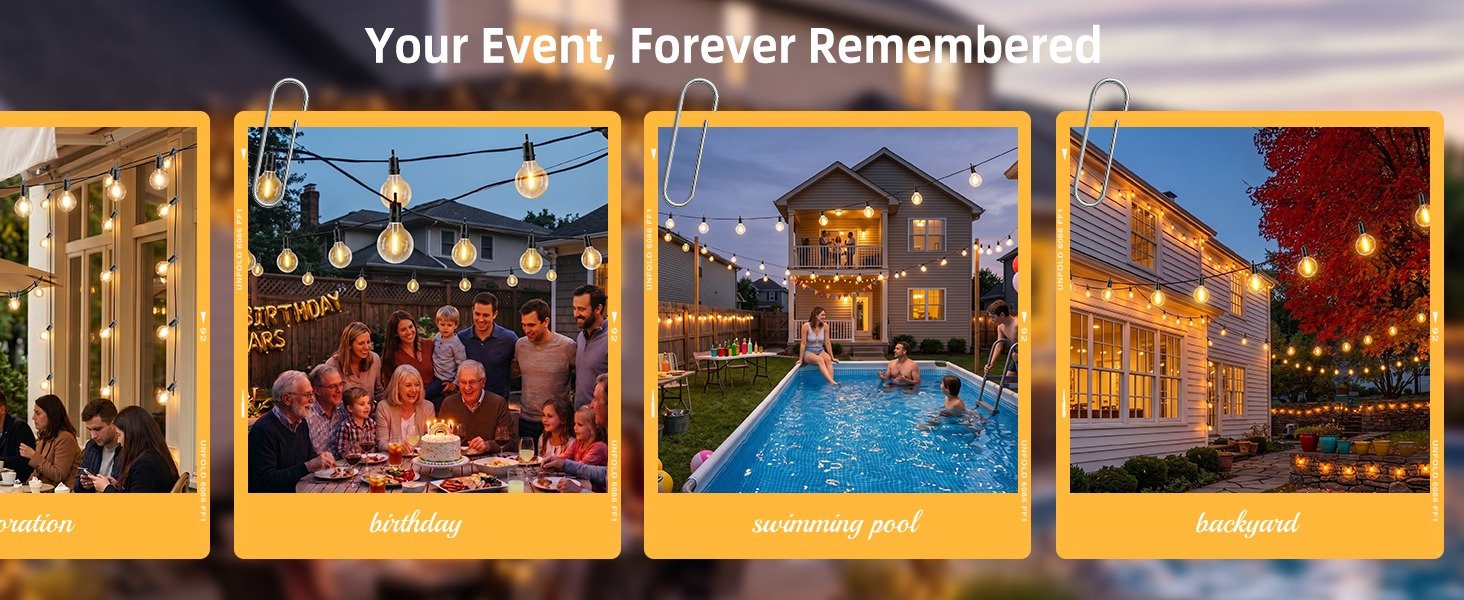
Small accessories can make a configuration more useful for a particular sales channel. Depending on availability, a bundle may include mounting clips, ground stakes, a panel stake, an extension lead, replacement bulbs, a remote, or an installation guide. Confirm what comes in the standard carton and what is an optional line item.
Ask how accessories are packed, identified, and reordered. A replacement bulb should match the socket and electrical specification; a visually similar part may not be compatible. If a buyer plans to offer spare parts, agree on part numbers and whether those items can be supplied throughout the expected product life.
Build a bundle around a clear application. For example, a garden retail kit may need a panel stake and simple setup guide, while a hospitality project may require longer panel placement cable and spare components. Test the complete bundle, not only the main string.
Customization options at a glance
| Area | Options to discuss | Buyer should confirm |
|---|---|---|
| Light appearance | Bulb shape, lens, color, brightness functions | Exact model, replacement compatibility, sample appearance |
| Layout | Lead cable, lit length, socket spacing, number of lights | Measurement definitions, drawing, connectors, fit to site |
| Solar system | Panel mount, cable reach, battery, charging input | Model-specific runtime method, exact included parts |
| Controls | Modes, dimming steps, timer, remote | Function mapping, user instructions, approved sample |
| Brand and channel | Logo, labels, manual, retail and transit packaging | Artwork proof, languages, barcode, claims, carton details |
| Accessories | Mounts, stakes, extension leads, spare components | Compatibility, packing list, reorder identifiers |
8. Compliance, own-brand responsibility, and change control
Compliance depends on destination market, product design, power source, intended use, and sales channel. Ask the supplier what reports and declarations exist for the exact model, then have the responsible importer or qualified compliance professional confirm which rules apply. A certificate for a similar-looking model is not automatically evidence for a changed configuration.
For the European Economic Area, CE marking applies only where relevant product legislation requires it; it is not a general quality mark. The European Commission assigns manufacturers responsibility for conformity assessment, technical documentation, the EU Declaration of Conformity, and affixing the CE mark. Under applicable harmonisation rules, a business placing a product on the market under its own name or trademark may be treated as the manufacturer. The exact obligations depend on the product and applicable legislation. European Commission: CE marking · Importer and distributor responsibilities.
For the United States, do not assume one lighting standard covers every solar string light. UL describes seasonal lighting strings and all-year-use string lights as distinct use categories. Its UL 588 Supplement SD discussion is specific to factory-assembled, parallel-connected string lights with a maximum input rating of 120 V. That scope should not be presented as applying automatically to a low-voltage, battery-powered solar set. Ask the test laboratory or certification body which standard and category apply to the exact design, voltage, wiring, and intended use. Product certification is model- and scope-specific; a mark must not be added to packaging without authorization. UL Solutions: UL 588 Supplement SD and all-year-use string lights.
A design, component, power system, or intended-use change should prompt a documented review of the specification and supporting evidence. It does not automatically mean the same retest is required for every change; the responsible compliance specialist or certification body should decide. Keep a revision-controlled approval record. Before shipment, align production inspection criteria with the signed sample and final documentation.
9. A practical OEM/ODM development process
- Write a use-case brief. State destination market, sales channel, installation environment, quantity range, launch timing, visual preference, and target user.
- Separate must-haves from options. Identify non-negotiable requirements, preferred upgrades, and features that can be omitted if they add complexity without improving the use case.
- Request a configuration matrix. Ask the supplier to show standard platform choices, custom engineering, MOQ implications, lead-time effects, and evidence available for each model.
- Review a sample and drawing. Check dimensions, controls, panel placement, mounting, accessories, packaging, and instruction content in a realistic installation.
- Freeze the specification. Record model number, component details, artwork revision, included items, test scope, labels, carton, and acceptance criteria.
- Approve production controls. Agree how incoming materials, assembly, function, final inspection, and any buyer inspection will be recorded. Define how deviations are handled.
- Plan repeat orders. Keep the approved sample, report revisions, and spare-parts information so the next batch can be compared to the same reference.
This sequence helps buyers compare supplier proposals on an equal basis. It also surfaces trade-offs early. A new custom cable, controller, or packaging design may be feasible, but the supplier should explain what must be re-sampled or re-verified before production.
Frequently asked questions
Can I put my brand on an existing solar string light?
Often, private labeling can start with an existing model, but available logo locations, label content, packaging, MOQ, and artwork setup vary by supplier. Ask for the standard model specification and confirm whether the branded configuration changes product identity or compliance responsibilities in your market.
Can I choose a custom length or bulb spacing?
Sometimes. It depends on the platform, tooling, cable and connector design, and order volume. Give the supplier a dimensioned site layout and ask for a drawing that separates lead cable from the illuminated section.
Can I customize the solar panel, battery, or control box?
Panel mounting, cable reach, battery configuration, and charging options may be configurable on some models. For a separate control box, confirm input and output ratings, polarity, connector, compatible battery and light load, charging method, and protection functions. Request the exact model data and runtime test method. Do not assume a change is available or that results from another configuration still apply.
Will custom features affect MOQ or lead time?
They may. Artwork, labels, packaging, custom cable assemblies, electronics, and tooling can each have different minimums and approval steps. Ask the supplier to quote standard and custom alternatives separately, with assumptions stated.
Can the manufacturer provide compliance documents for my brand?
The supplier may provide reports or technical documents for a product configuration, but the buyer should verify that they match the final model and destination. If selling under your own name, understand the legal responsibilities that may apply. Seek market-specific compliance advice where needed.
What should I send for an OEM quotation?
Send your target market, use case, expected quantity range, desired length and layout, bulb style, solar-panel location, required controls, branding and packaging needs, accessories, and launch date. Attach a sketch or reference images and identify which requirements are mandatory.
Make the specification work for your brand
The strongest custom solar string light brief starts with how the product will be installed and sold. Then it defines appearance, layout, solar system, controls, materials, branding, and documentation in one approved specification. Buyers gain a clearer basis for comparing suppliers, reviewing samples, and planning repeat orders.
For a product inquiry, OEM/ODM requirements, or project-specific advice, contact Couleelight at info@couleelight.com or call +1 737 702 0119. Share your target market and application so the team can discuss relevant configurations and next steps.
Planning a custom solar string light program?
Send Couleelight your target application, market, and product requirements to discuss OEM/ODM options and a practical sample plan.
Discuss your projectTechnical note: Customization availability and compliance obligations vary by model and market. Confirm final specifications, test evidence, labeling, and installation guidance for the exact product before sale.