
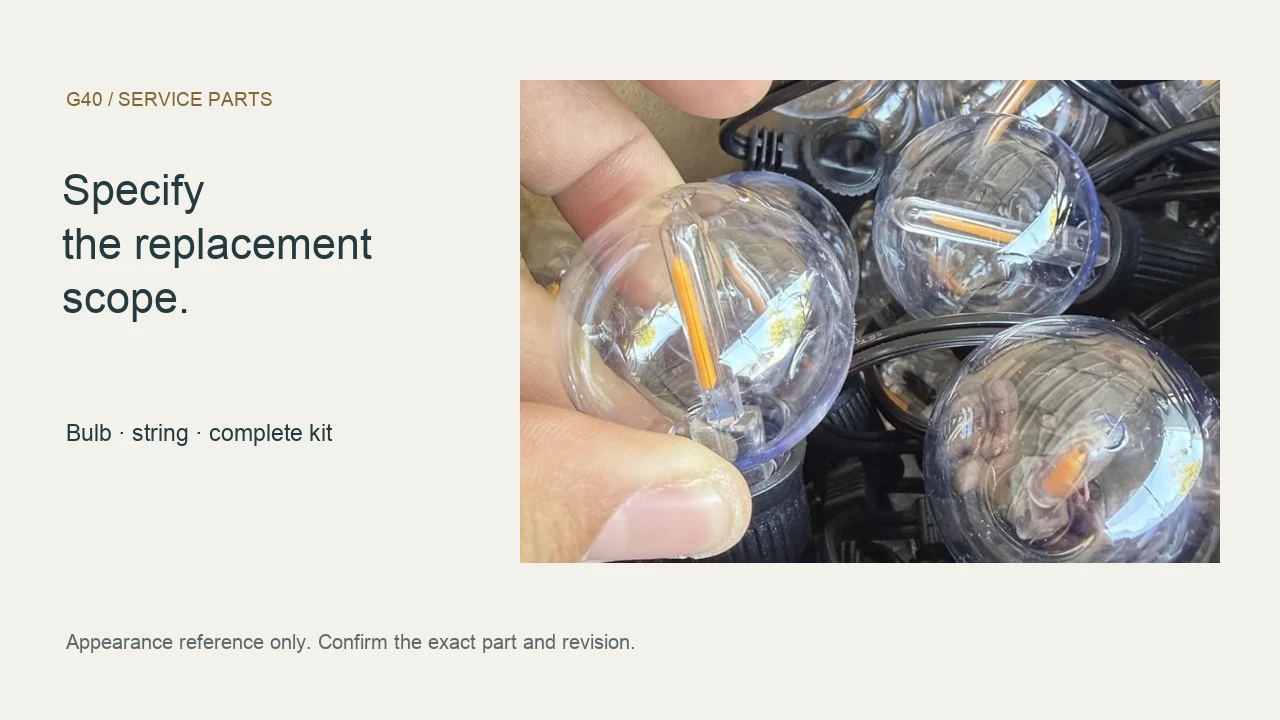
Stock the smallest replacement unit that is documented as serviceable for the exact supplied version. A single failed light point may justify a spare bulb; damage to a non-serviceable socket or cable may call for a replacement string; an unresolved or unsupported component match may make a complete matched set the practical service option. The symptom alone does not decide which part to send.
For importers, distributors and retail brands, the useful purchasing unit is an identified spare with a defined replacement scope. “G40 spare bulb” is too broad to become an order line: the globe shape does not establish the base, electrical requirements or permitted repair.
Couleelight’s G40 wholesale guide (new tab) mentions spare-parts availability. It does not establish a replaceable-bulb specification or a universal replacement string. This guide adds a method for choosing the spare, checking the proposed match and recording the approved version in the spare-parts order.
Choose the replacement scope before ordering
Use the table after the supplier has reviewed the reported fault and the original model identity. A dark bulb is an observation, not a confirmed bulb failure; a whole dark string can also involve supply or control settings. Follow the model’s troubleshooting instructions before allocating service stock. Isolate power as instructed, and do not trial-connect unidentified parts, cut cable or open sealed assemblies to diagnose a match.
| Service situation / candidate spare | How to verify the choice | What the order must name |
|---|---|---|
| One light point; consider an individual bulb | Supplier confirms user replacement for this model. Match bulb and holder references, drive, rating, light appearance and replacement instructions; retain evidence for the exact assembly. | Bulb part/revision; compatible set and string revisions; quantity in individual bulbs; any seals or other required items; approved instructions. |
| Socket/cable fault, or lamps not individually serviceable; consider a complete replacement string | Confirm the detachable service boundary and the exact controller–string pairing. Verify layout, load, both connector halves, pin map and sealing arrangement. | String assembly part/revision; included lamps and operating count; lengths/layout; compatible box variant/revision; connector drawing; contents and exclusions. |
| Several components affected, no supported separate replacement, or original build cannot be identified; consider a complete matched set | Supplier identifies a complete replacement kit and its contents. If changed from the original, review installation, operation, appearance and retail instructions before accepting it. | Kit part/revision; complete packing list; intended original SKU/lot; any changed accessories, functions or installation limitations. |
| Identity, replaceability or interface unresolved; hold the proposed spare | Obtain labelled photographs, model instructions, controlled drawings/specifications and a supplier compatibility statement identifying its evidence basis. Request exact-pair verification where needed. | Pending item, evidence required, owner and decision reference. Do not label it interchangeable or release it for that unresolved application. |
A complete set avoids creating a new component pairing only when it is supplied and documented as a matched kit. It does not make an unidentified substitute equivalent to the customer’s original product. Where the controller alone is implicated, request its own approved service option; replacing a healthy string would not address that fault.
Check two interfaces, not just the globe shape
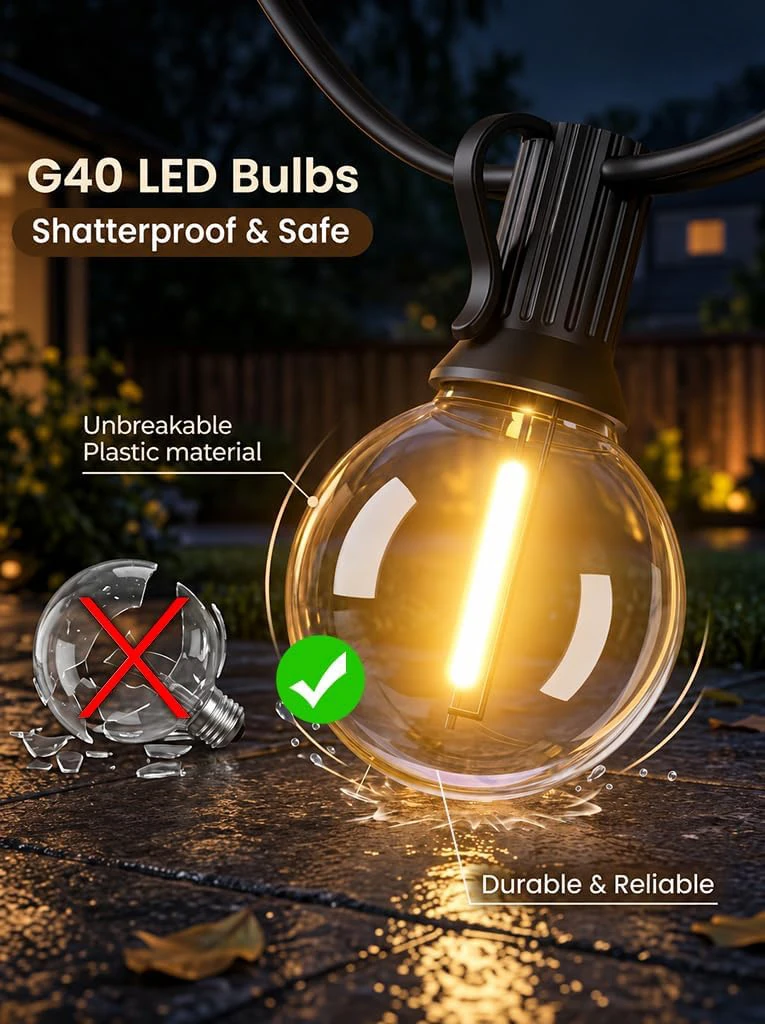
At the bulb–holder interface: request the lamp part number and revision, whether the lamp is replaceable, base/socket drawing, required electrical supply or drive (how the lamp is powered), and actual input rating. Confirm colour or colour temperature where specified, dimming behaviour and any fit, sealing or installation conditions. A matching screw appearance is insufficient; do not infer an E12, E14 or other base designation from a globe-and-holder image.
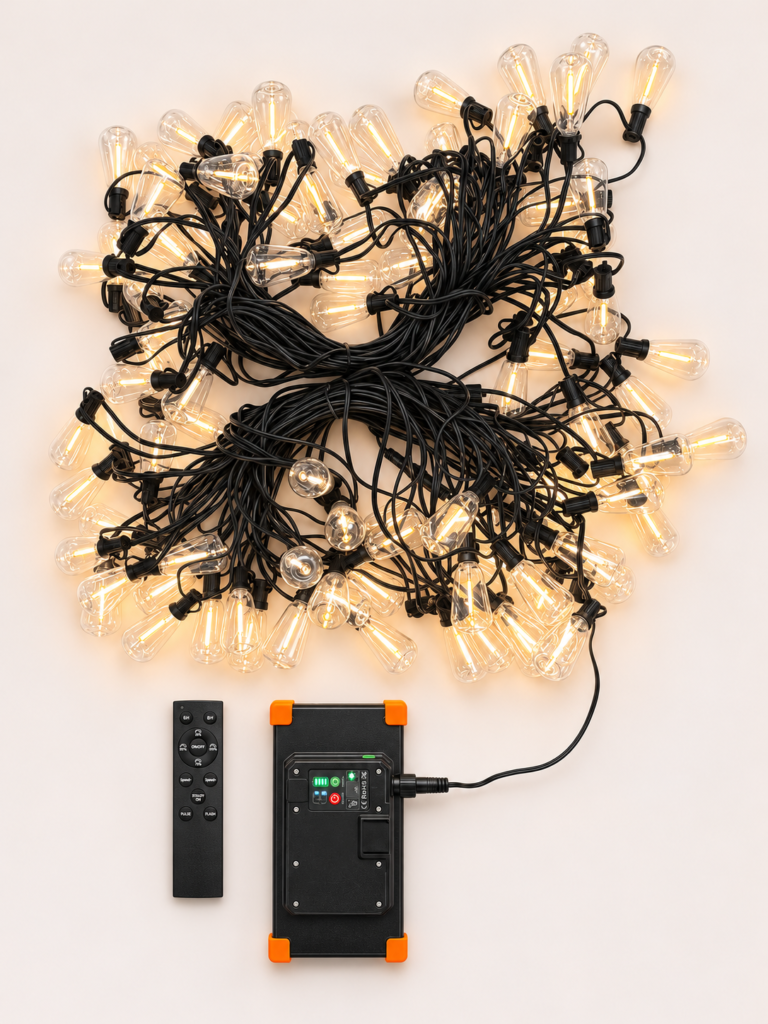
At the string–control-box interface: identify both assemblies and the output variant. Compare voltage range and drive type, current/power limits under the required settings, both connector halves, the pin map (which contact carries each connection, with the viewing direction stated), alignment keys, locking and seals. Keep the lighting output separate from battery, panel and USB charging specifications. The control-box matching guide (new tab) explains the electrical review in detail.
A longer lead, different bulb count or revised lamp can change the load or voltage at the lamps. A connector revision may affect fit and protection even if its outside looks familiar. Any outdoor-protection claim must identify the parts, assembled condition and instructions covered by the evidence; a box rating cannot establish the rating of the replacement assembly.
Turn a quotation into a checked sample configuration
Request separate quotation lines for the proposed bulb, string assembly and complete kit where available. Each should identify the supplier part number, revision, compatible original SKU and scope of supply. Ask what “replacement string” includes: lamps, lead, connectors, seals and accessories must be explicit. A section of a longer run is an option only if the documented design provides that service boundary; “replacement” does not mean extendable or cuttable.
Before ordinary sample operation, have the supplier resolve the electrical and mechanical match and provide the applicable instructions. Then compare the labelled replacement with the retained original reference. Photograph markings and mating parts; compare the layout and packing contents with the quoted configuration. Carry out only the documented replacement procedure.
Set up a traceable comparison. Agree the method and acceptance criteria first. Record the original kit and bulb/string/controller revisions, replacement sample ID and instruction revision. Note charge preparation, operating mode, brightness setting, ambient conditions and observation period.
Check function and appearance. Check all operating lamps, applicable switching, dimming and timer functions, and any flicker or inconsistent response. Compare light colour and apparent brightness with the retained original under the same settings and viewing conditions. Use agreed instrument measurements when objective limits are required. A brief light-up does not establish endurance or restored outdoor protection.
The result should be approved for named versions and conditions, held for specific missing evidence, or rejected against a named requirement. Retain observations and supporting engineering/report references separately. The sample-to-bulk acceptance plan (new tab) covers how that approval carries into lot checks and change control; a spare sample approval does not release a shipment.
Hypothetical decision: a proposed bulb fits physically, but its drive specification is missing. Hold bulb approval and request that specification plus the supplier’s compatibility basis for the named string. Do not release it because it illuminated once. If the exact references, required evidence and agreed checks are subsequently satisfied, approve only that recorded scope. These are decision examples, not Couleelight test results.
Write an order your supplier and warehouse can use
A useful spare-parts order answers five questions: which original product, which spare, what it fits, what comes in the pack, and what evidence allows release. Keep the key identifiers on the order line; attach the detailed specification and approval record. A part number identifies the item; its revision identifies the version.
1. Identify the original product
Record: your product code (SKU), the supplier’s kit model and revision, the original purchase order (PO), and the production lots that need support.
Why it matters: the same retail product name may cover more than one build. The supplier must know which build the spare will service.
2. Name the spare and its permitted use
Record: bulb, complete string assembly or complete kit; supplier spare part number and revision; your warehouse stock code; quantity and order unit.
Define the fit: list the original models, component revisions and lots approved for this spare. Name excluded versions and any limits on replacement. Do not accept “fits G40” as the compatibility description.
3. State exactly what is included
For a bulb: identify the lamp and any required seals or fitting items. For a string, list the included lamps and operating count, leads, supplied connector halves, seals and accessories. For a kit, attach the complete packing list. State exclusions.
Attach the configuration: total length, illuminated length, lead length and bulb spacing where relevant, plus finish and the approved light-colour and brightness reference. Record units per pack/carton, protective packing and part/revision/lot labels.
4. Link the evidence and replacement limits
Attach the approved files: applicable lamp/holder and connector drawings with revision numbers; electrical drive and load limits; pin map with viewing direction; and the permitted replacement instructions. Identify who may perform the replacement and the conditions needed to maintain outdoor protection. Record any bans on mixing versions, cutting or extending.
Link the approval record: original and replacement sample IDs, procedure and acceptance criteria, test settings and conditions, observations, supporting reports, decision, approver and date. The order should point to this record rather than repeat every test detail.
5. Agree supply terms and control changes
Agree: price and currency, minimum order quantity (MOQ), availability or lead time and when it starts, shipping, warranty/claim handling and who pays claim freight. Record the agreed supply period, discontinuation notice and written approval required before any substitution.
Release rule: list each missing item, its owner and due date. Keep the affected order line on hold until the required evidence is accepted. Record the relevant lot-acceptance and release reference; sample approval alone does not release a shipment.
Example: what the order line should look like
Fictional format only — these codes are not Couleelight models or an approved pairing. The example shows the level of identification; it does not demonstrate compatibility.
Item: Complete replacement string, supplier part EXAMPLE-STR, revision B; buyer stock code EXAMPLE-SPARE.
Approved use: Original kit EXAMPLE-KIT revision A, controller EXAMPLE-BOX revision C, original PO EXAMPLE-PO and the lots listed in the attached compatibility record. Other versions excluded.
Supply and release: Quantity in complete strings; contents and layout per the agreed packing list/specification. Release only against the accepted sample record and replacement instructions. Any missing reference keeps this line on hold.
Replace every example code with the supplier’s actual references. Label service packs so warehouse staff can select the right part and revision without opening a retail set. Keep the supplier lot and compatibility record with the stock record; hold superseded or unresolved versions separately. A changed part or revision needs a review of the affected fit, electrical requirements, controls, appearance and protection evidence before substitution.
Set stock quantities from service exposure
Choose quantities using the installed or sold base by version, observed failure categories, replenishment time, service-response target and the cost of packing and shipping each remedy. Separate warranty remedies from paid spares. Avoid one percentage across incompatible versions, and do not apply a complete-set carton minimum to spare bulbs without a separate quotation. For a new range with no service history, agree a provisional stock allocation and a review point after the trial order; no universal spare ratio is prescribed here.
The remaining model questions are precise: which G40 versions have replaceable bulbs, which bulb/holder and connector parts they use, and which string or kit is approved for each original build. Request model instructions, controlled specifications/drawings and identified sample or pairing records to close them. The supplied visuals and the general spare-parts statement do not answer those model-specific questions.
Request the right spare configuration
Send Couleelight the original model or order reference, photographs of the bulb/holder and accessible connector markings, the reported symptom, destination market and expected spare quantity. Add the retained sample and specification references if available. Ask for the supported replacement scope, identified spare quotation and evidence needed to approve it. Unknown fields can remain blank at first enquiry.